Corporate Event

Live Band vs. DJ for a Corporate Event | Atlanta Event Entertainment

Live Band vs. DJ for a Corporate Event: Which Is Better?

One of the most common corporate entertainment questions sounds simple:

Should we hire a band or a DJ?

The answer is equally simple.

It depends.

There isn't a universally correct choice because a live band and a DJ do different jobs extremely well.

The better question is:

What do you want the entertainment to accomplish?

When a Live Band Makes Sense

A professional live band becomes part of the event itself.

There's something inherently different about walking into a ballroom and seeing a stage filled with musicians.

It creates scale.

It creates movement.

It gives guests something to watch.

And when the right band connects with the audience, the performance can become one of the things people remember about the event.

A live band is especially effective for:

Company celebrations
Awards dinners
Holiday parties
Galas
Product launches
Large employee events
Client entertainment
Festivals and outdoor corporate events

If you're trying to create a featured entertainment moment, the advantage generally goes to the band.

When a DJ Makes Sense

DJs have some significant advantages.

They require less physical space.

They can access an enormous catalog of music.

They can transition instantly between genres.

And in many cases, they cost less than a full professional event band.

A DJ can be especially effective for:

Cocktail receptions
Afterparties
Smaller events
Dance-focused events
Events with limited stage space
Long entertainment windows
Events requiring extremely broad musical variety

A great DJ also understands pacing.

Pressing play is easy.

Reading a room isn't.

A Band Is More of a Focal Point

This is one of the biggest differences.

A DJ can disappear into the flow of an event.

A band usually cannot.

That can be either an advantage or a disadvantage.

If you want entertainment to be a major feature, great.

If the CEO is giving a speech while the drummer is line-checking a snare ten feet away, less great.

The schedule matters.

A professional entertainment provider should understand that at most corporate events, the band is a focal point—not the only focal point.

Awards, speeches, presentations, dinner service and networking still need room to happen.

What About Musical Variety?

A DJ wins this category on pure quantity.

No live band can realistically offer every song ever released.

But quantity isn't necessarily the goal.

A good party band builds a repertoire around songs that work with audiences.

The decision becomes:

Do you want guests hearing the exact recordings they know?

Or do you want the energy created by musicians performing those songs in the room?

Both are valid.

They're just different products.

Which One Is Better for Dancing?

Either can be.

The myth that a band automatically fills a dance floor—or that a DJ automatically does—is nonsense.

A bad band can clear a dance floor.

So can a bad DJ.

What matters is whether the entertainer understands:

Song selection
Pacing
Audience demographics
Transitions
Energy management
When to take requests
When to ignore requests

Experience matters more than format.

What About Volume?

This is worth discussing before signing a contract.

A DJ's volume can generally be controlled very precisely.

Live bands have historically been more complicated because acoustic drums, guitar amplifiers and stage monitors generate their own volume.

Modern professional event bands can address much of this with:

Electronic drums
Guitar and bass modelers
In-ear monitoring
Digital consoles
Controlled stage setups

If your venue has strict volume restrictions, ask the band how they handle them.

“We'll just play quieter” isn't much of a technical plan.

Do Bands Require More Space?

Usually.

A DJ may only need a compact booth or table.

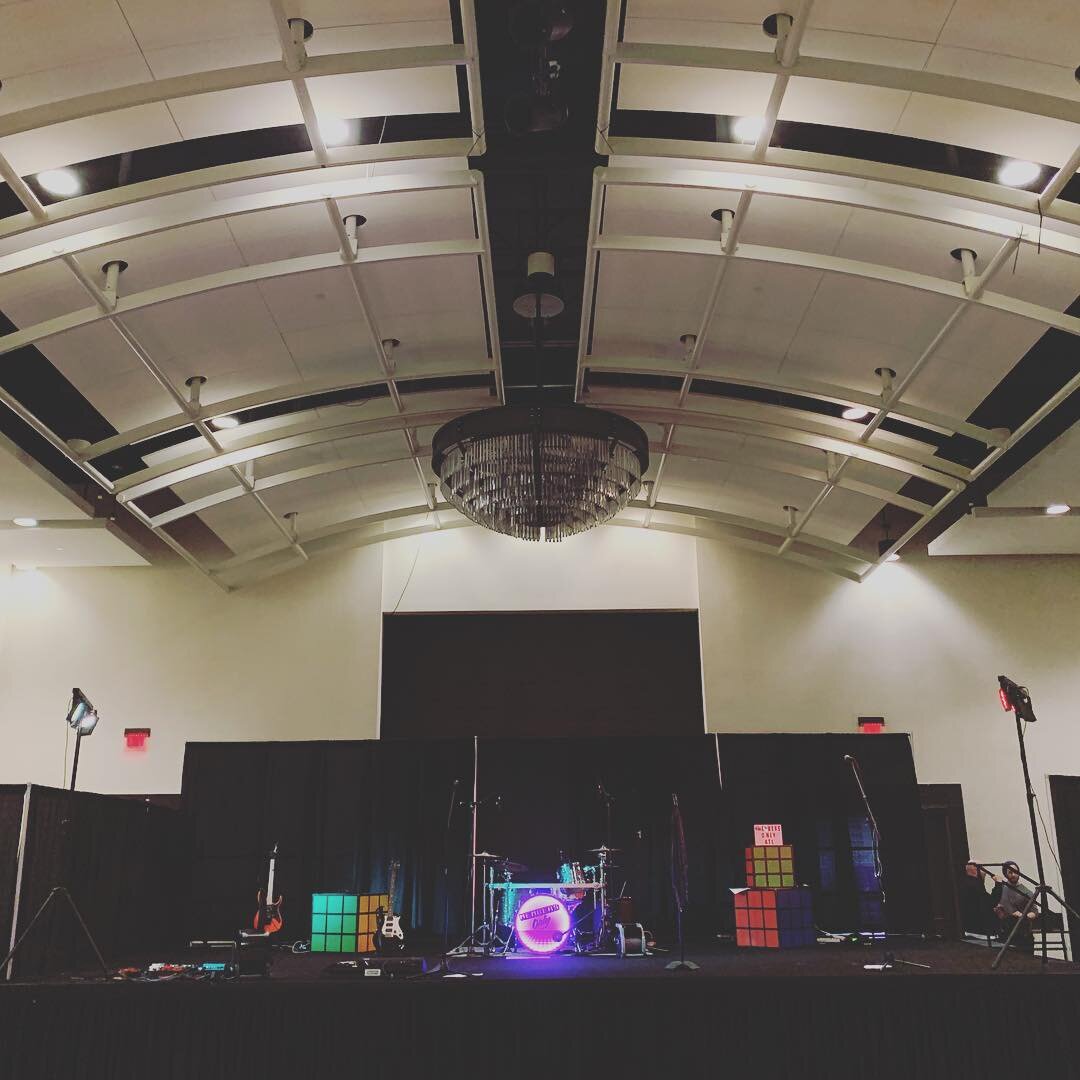
A band needs room for musicians, instruments, microphones, monitors and production.

If floor space is at a premium, that matters.

We'll cover this in more detail in our guide to How Much Space Does a Live Band Need?

Why Not Hire Both?

This is frequently the best answer.

For example:

DJ during cocktail hour.

Band after dinner.

DJ afterparty once the band finishes.

Or use a live band for the featured portion of the evening while a DJ provides seamless music everywhere else.

You don't have to make entertainment a binary decision.

The Bottom Line

Choose a live band when you want:

A visual performance
Concert energy
Guest interaction
A featured entertainment experience

Choose a DJ when you want:

Maximum musical flexibility
Smaller footprint
Long uninterrupted music
Potentially lower cost

Choose both when the event benefits from each format doing what it does best.

ATL Party Bands can help provide live bands, DJs and production for corporate events throughout Atlanta and Georgia.

Corporate Holiday Party Entertainment Ideas | Atlanta Events

Corporate Holiday Party Entertainment Ideas That Aren't Terrible

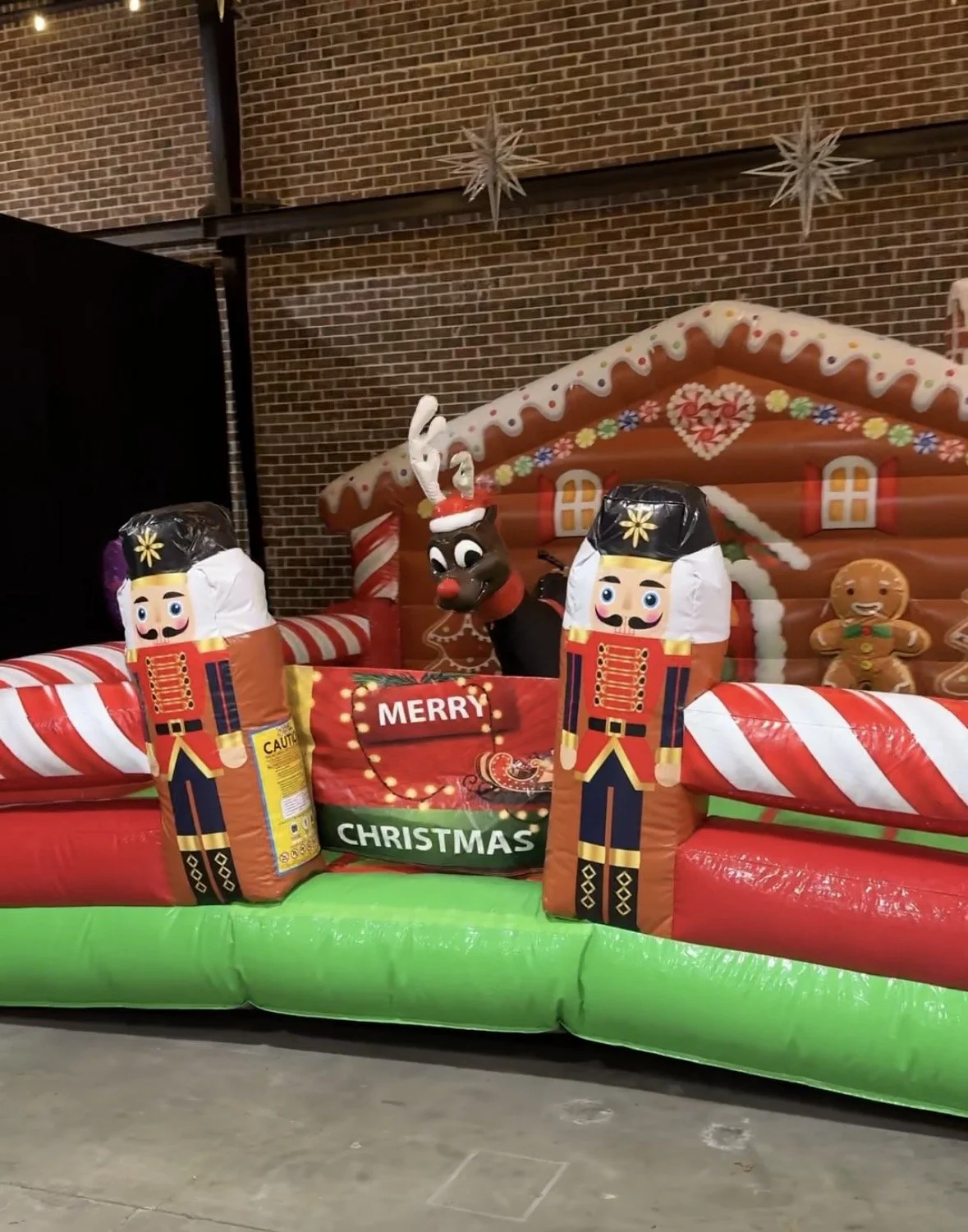
Mechanical Reindeer not included.

Corporate holiday parties have a unique challenge.

You need entertainment that works for people who:

Didn't all choose to attend the same concert.

Don't all like the same music.

May range dramatically in age.

And still have to see each other Monday morning.

No pressure.

The good news is that there are plenty of ways to build a great company holiday event without defaulting to “put a DJ in the corner and hope something happens.”

1. Hire a Professional Party Band

There's a reason live bands remain one of the most popular forms of corporate entertainment.

They create an obvious centerpiece.

A good party band can move between decades and styles while giving the room something to watch even before everyone decides to dance.

For a broad corporate audience, prioritize:

Recognizable songs
Strong vocals
Professional production
Controlled stage volume
Good pacing
An experienced front person

You aren't hiring musicians to demonstrate how sophisticated their music taste is.

You're hiring them to entertain the room.

2. Turn Your Employees Into the Band

Live band karaoke takes a different approach.

Instead of only watching the entertainment, guests can become part of it.

Employees choose songs and perform with professional musicians while everyone else watches.

It's particularly effective for company parties because participation is optional.

Nobody needs to be dragged into a mandatory “team-building activity.”

The outgoing people sign up.

Everyone else enjoys watching their manager sing Bon Jovi.

Nature takes its course.

3. Book a DJ

A DJ is still one of the most flexible corporate entertainment options available.

They're especially useful when:

Space is limited
The party runs for several hours
The audience has extremely broad musical tastes
You want uninterrupted dancing
You already have several other event features competing for attention

A good DJ can also handle introductions, announcements and transitions throughout the event.

4. Choose a Theme and Commit to It

A themed band can create more of an experience than generic entertainment.

Examples include:

'80s night
'90s party
Pop-punk or Y2K event
Disco
Classic rock
Specific tribute concepts

The important word is commit.

If you're doing an '80s party, carry the theme through:

Decor
Lighting
Photo areas
Dress suggestions
Cocktails
Entertainment

A great themed band dropped into a completely generic ballroom still helps.

A cohesive event is better.

5. Combine Live Music and a DJ

You don't have to choose.

One of the easiest ways to structure a corporate holiday party is:

Cocktail-hour DJ or background music
Dinner and speeches
Live band
DJ afterparty

Each format handles the portion of the event where it's strongest.

It also prevents the band from becoming responsible for four straight hours of an event where only 90 minutes actually needs a featured live show.

6. Use Smaller Live Music During Cocktails

Not every musician needs to stand on a giant stage.

Soloists, acoustic duos and small ensembles work well during:

Cocktail hour
Guest arrival
Dinner
VIP receptions
Networking

This can add live energy without interfering with conversation.

Then the larger entertainment can begin later.

7. Build Around Interaction

The best holiday-party entertainment doesn't always happen exclusively onstage.

Look for opportunities for guests to participate:

Live band karaoke
Photo experiences
Interactive games
Song requests
Contests
Employee performances

Just remember one rule:

Optional fun is usually more fun than mandatory fun.

Don't Forget Production

The most expensive entertainment in the world can still feel amateur if the room looks and sounds bad.

Consider:

Stage lighting
Dance-floor lighting
Proper PA coverage
Wireless microphones for speeches
Walk-in music
Playback during dinner
Video screens
Event branding

Production shouldn't overpower the event.

It should make the event feel intentional.

Think About the Schedule Before the Entertainment

This is where many corporate parties go wrong.

The band isn't the only thing happening.

You may also have:

Dinner
Awards
Executive remarks
Videos
Raffles
Dessert
Networking

Build the schedule first.

Then decide where entertainment creates the most value.

Corporate Holiday Entertainment in Atlanta

ATL Party Bands provides live bands, DJs, live band karaoke and event production for corporate holiday parties throughout Metro Atlanta and Georgia.

Tell us your audience, venue and budget and we'll help you build an entertainment plan that actually fits the event.

[PLAN YOUR HOLIDAY PARTY]


How Much Space Does a Live Band Need? | Stage Size Guide

How Much Space Does a Live Band Need?

“We have space for a band.”

That sentence can mean very different things.

Sometimes it means:

“We have a 24-by-16-foot professional stage.”

Sometimes it means:

“We've moved a ficus and there's now six feet between the buffet and the emergency exit.”

Those are not the same thing.

If you're hiring a live band for a wedding, corporate event, festival or private party, confirming the performance area early can prevent a surprising number of problems.

A Practical Stage Size Guide

Every band has different requirements, so the band's actual technical rider should always win.

But as a general planning reference:

Soloist or duo: approximately 8' x 8' to 10' x 10'

Small 3–4 piece band: approximately 12' x 12' to 12' x 16'

Typical 5–6 piece party band: approximately 16' x 20'

Larger 7–10 piece event band: approximately 20' x 24' or larger

These aren't laws.

They're useful starting points.

A six-piece group may physically squeeze into a smaller area, but “technically fits” and “can perform safely and professionally” are different standards.

What Actually Takes Up the Space?

It's not just six human beings standing next to each other.

A typical band setup may include:

Drum kit
Keyboards
Guitars
Bass
Microphone stands
Pedalboards or modelers
Wireless systems
Monitor systems
Playback equipment
Digital stage boxes
Cabling
Lighting
Speaker systems

Musicians also need enough room to move without stepping backward onto someone's pedalboard or falling off the stage.

Always entertaining.

Rarely desirable.

Does the PA Need to Fit on the Stage?

Usually, no.

Main speakers are generally positioned beside or in front of the stage to provide proper coverage.

Subwoofers may sit on the floor.

The audio console may be located elsewhere in the room.

Lighting fixtures may be placed on stands or truss around the performance area.

This means the band's total production footprint can be larger than the stage itself.

Ask where everything needs to go.

What About a Band Without a Stage?

A raised stage isn't always necessary.

Bands regularly perform at floor level for weddings, private parties and smaller corporate events.

What matters is having:

A defined performance area
A flat and stable surface
Adequate power
Protection from guests and traffic
Enough clearance for equipment

Just don't accidentally place the band in the path between the bar and the bathroom.

You will learn things about crowd behavior very quickly.

Power Matters Too

Stage dimensions get most of the attention, but electrical access is equally important.

Audio systems, digital consoles, keyboards, wireless systems, guitar equipment, lighting and other electronics require reliable power.

Large production systems may require dedicated electrical circuits or more substantial event power.

This should be discussed with the band or production company before the event.

An extension cord plugged in behind the catering coffee maker is not a production strategy.

Indoor vs. Outdoor Events

Outdoor shows add another layer.

The band may need:

A covered stage
Weather protection
Level flooring
Safe electrical distribution
Wind-resistant equipment placement
Additional PA coverage
A weather contingency plan

“We'll put up a pop-up tent if it rains” may be adequate for hamburgers.

It is less reassuring when there's tens of thousands of dollars of electrical equipment underneath it.

Don't Forget Load-In

Where the band performs is only part of the equation.

Ask:

How close can vehicles get?

Are there stairs?

Is there an elevator?

How far is the loading area from the stage?

When can setup begin?

Does everything need to be removed immediately afterward?

A perfectly sized stage on the third floor with no freight elevator can create an entirely different production requirement.

Get a Stage Plot Before Event Day

Professional bands should be able to provide a stage plot or technical rider showing where musicians and major equipment need to be positioned.

Send this to:

Your venue
Event planner
Production company
Stage provider

early enough to catch problems.

The morning of the event is a terrible time to discover the keyboard player is supposed to occupy the same physical space as the podium.

The Bottom Line

Don't ask only:

“Will the band fit?”

Ask:

“Will the band and production have enough room to operate safely, sound good and look professional?”

ATL Party Bands can coordinate directly with venues and production providers to make sure your live entertainment setup works before event day.